October 16, 1799
Earthquake in Bagnara
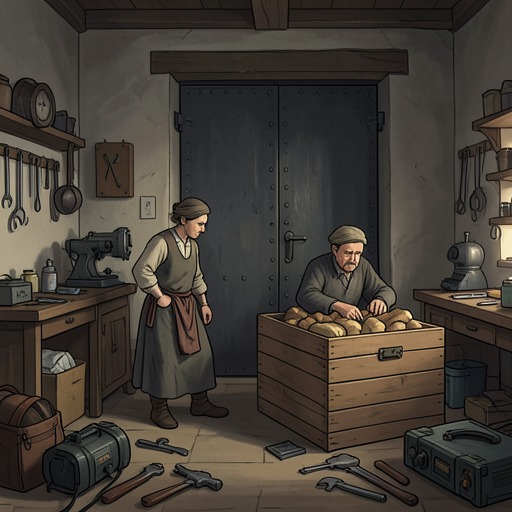
A violent earthquake strikes [Bagnara Calabra](entity:location-recall-location-bagnara-calabra-25d145e98fab) during the night. [Ignazio Florio](entity:character-recall-character-ignazio-florio-c80f7f146558) pulls his nine-year-old niece [Vittoria](entity:character-recall-character-vittoria-fe5f75dc3454) to safety, then helps his brother Paolo, sister-in-law [Giuseppina Saffiotti](entity:character-recall-character-giuseppina-saffiott-cc31426cc701), and infant Vincenzo escape into the courtyard as the house shakes around them.
The tremor revives the family’s memories of the devastating [1783 Calabrian earthquakes](entity:event-recall-event-1783-calabrian-earthqua-3062cd6aa508), which killed Ignazio’s mother and [Giuseppina](entity:character-recall-character-giuseppina-8a9096f5c374)’s parents. In the aftermath, Ignazio retrieves his mother’s wedding ring, a keepsake that will remain a source of comfort and a lasting emblem of his family’s history.
The night of October 16, 1799
Paolo Chooses Palermo
After checking on his sister Mattia and the family’s boat, Paolo tells Ignazio that he wants to leave [Bagnara](entity:location-recall-location-bagnara-4327674797f6) and move to [Palermo](entity:location-recall-location-palermo-b16a2f0e892c). The earthquake has strengthened his resolve: he wants a safer future for his infant son and a wider life than the village can offer.
Ignazio fears that his brother will leave him behind, but Paolo intends to take him along. [Giuseppina](entity:character-recall-character-giuseppina-8a9096f5c374), who is deeply attached to her home and family, has no say in the decision. Paolo announces that they will depart within days, insisting that his wife and child will go with him.
November 1799
The Family Leaves Bagnara
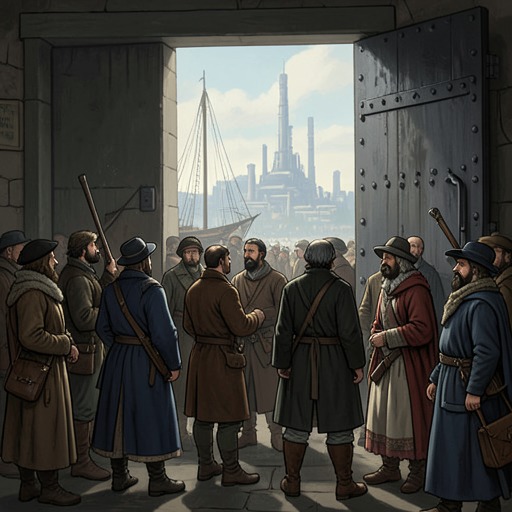
The Florios and [Giuseppina](entity:character-recall-character-giuseppina-8a9096f5c374) leave [Calabria](entity:location-recall-location-calabria-cc21af8953e5) by boat for [Palermo](entity:location-recall-location-palermo-b16a2f0e892c). Ignazio is thrilled by the city’s harbor, crowded ships, colors, and trade, while Giuseppina watches the sea and grieves for the home and relatives she has been forced to leave.
Their new quarters are a dark, dirty set of ground-floor rooms near the family’s spice shop. Giuseppina is appalled by the cramped, neglected dwelling, while Ignazio and Paolo confront the equally shabby store. Their arrival marks the start of a new life, but prosperity is far from assured.
Late 1799
The Florios Reopen the Shop
Paolo and Ignazio clean and reopen the [Palermo](entity:location-recall-location-palermo-b16a2f0e892c) spice shop, only to face immediate hostility from established merchants. [Don Canzoneri](entity:character-recall-character-don-canzoneri-262c95d05f42) and his son-in-law [Carmelo Saguto](entity:character-recall-character-carmelo-saguto-fb7338a55999) question their competence and warn that the newcomers will fail, exposing the class prejudice and commercial gatekeeping the brothers must overcome.
The Florios persist. When a poor woman seeks affordable help for her feverish husband, they prepare herbs and cinchona bark and waive payment. Their practical generosity brings the first customers and begins the reputation that will distinguish their business from its rivals.
Christmas 1799
Giuseppina’s First Letter
[Giuseppina](entity:character-recall-character-giuseppina-8a9096f5c374) asks Ignazio to write to Mattia because Paolo refuses to help her keep in touch with the sister-in-law who has been her closest friend. Ignazio agrees, despite recognizing that his involvement places him between his brother and Giuseppina.
At dinner, Paolo relents enough to dictate a greeting for the letter. Giuseppina’s account of their new home conceals her loneliness and dislocation, which Ignazio understands even though she cannot say it openly.
Early 1800
The Bark Shortage Breakthrough
A fever epidemic creates urgent demand for cinchona bark, and a shipment brought by [Paolo Barbaro](entity:character-recall-character-paolo-barbaro-496073a42176) gives the Florios stock when larger shops are running short. Apothecaries and physicians who had shunned the newcomers now come to buy from them.
Paolo’s sharp public reply to Saguto marks a turning point: the shop is no longer merely struggling to survive but is becoming a recognized supplier. The brothers’ name begins to carry weight in [Palermo](entity:location-recall-location-palermo-b16a2f0e892c)’s trade.
Winter 1800
Giuseppina’s Pregnancy
[Giuseppina](entity:character-recall-character-giuseppina-8a9096f5c374) discovers that she is pregnant, but her difficult marriage and isolation make the prospect frightening rather than welcome. She visits the [Bagnara](entity:location-recall-location-bagnara-4327674797f6) midwife [Mariuccia Colosimo](entity:character-recall-character-mariuccia-colosimo-122ac72ffb8e) and admits that Paolo does not know.
The pregnancy ends in a miscarriage after Giuseppina collapses from pain and bleeding. Ignazio carries her to bed and helps the midwife, while Paolo arrives too late to understand how ill his wife has been. The loss deepens the estrangement within the household and intensifies Ignazio’s protective bond with Giuseppina.
February 1803
The Partnership Breaks
A series of disputes culminates when [Paolo Barbaro](entity:character-recall-character-paolo-barbaro-496073a42176) sells a valuable consignment of ivory and cinnamon to a competitor and keeps the proceeds. [Paolo Florio](entity:character-recall-character-paolo-florio-5c60be0331ed) sees this as a betrayal of their shared business, while Ignazio cannot forgive the damage done to the family bond with Mattia.
The partnership is dissolved before a notary. The Florios sell the boat and divide the remaining goods, while Paolo Barbaro establishes himself elsewhere. The commercial split becomes a lasting rift between the two families.
Around 1803
The Unwanted Second Pregnancy
[Giuseppina](entity:character-recall-character-giuseppina-8a9096f5c374) learns she is pregnant again and, still burdened by her isolation and troubled marriage, fears that the child may grow into someone like Paolo. She considers ending the pregnancy but is held back by religious teaching and dread of sin.
Before she can tell Paolo, she loses the pregnancy. The event leaves her with a lasting private guilt, while her marriage remains marked by distance and unspoken injury.
Around 1805
Paolo Refuses Mattia
A letter from Mattia reaches [Giuseppina](entity:character-recall-character-giuseppina-8a9096f5c374): her husband [Paolo Barbaro](entity:character-recall-character-paolo-barbaro-496073a42176) is ill and alone in [Palermo](entity:location-recall-location-palermo-b16a2f0e892c), and she asks for help. [Paolo Florio](entity:character-recall-character-paolo-florio-5c60be0331ed) refuses to read the letter, tears it up, and denounces his sister for siding with her husband after the commercial rupture.
Giuseppina challenges his treatment of Mattia, but Paolo’s resentment prevails. Ignazio gathers the fragments of the letter, recognizing that the family has been broken by grudges he cannot mend.
Late 1806
Paolo’s Illness
Paolo’s persistent cough worsens until he coughs blood. Ignazio calls a physician and moves his brother to the countryside for treatment, taking on the responsibility of the shop and the family. Vincenzo, still a child, understands that his father is seriously ill and retreats into his schoolwork.
Ignazio secretly contacts Mattia and arranges for her to come from [Marsala](entity:location-recall-location-marsala-05a93049fcec). Paolo, however, refuses to see her, even as his illness advances and his sister pleads for reconciliation.
Early 1807
Ignazio and Giuseppina Nearly Yield
After learning from the physician that Paolo is dying, [Giuseppina](entity:character-recall-character-giuseppina-8a9096f5c374) breaks down in Ignazio’s arms. Their shared grief briefly gives way to the life they have never allowed themselves to imagine together, but Ignazio stops himself and leaves before the moment becomes an affair.
Paolo soon repents his treatment of Mattia and asks Ignazio to tell her that he forgives her. Ignazio carries the message, but the reconciliation comes too late to reunite the family before Paolo’s death.
May 1807
Paolo’s Death
Paolo dies after a long decline from tuberculosis. Ignazio kisses his brother’s forehead and silently vows to honor the dying man’s request: he will raise Vincenzo as a father and protect the boy and the family.
Vincenzo runs from the funeral preparations to the harbor, where he sits with Ignazio and asks what he will do without his father. Ignazio admits that he, too, feels alone. From this moment he becomes the head of the household and the business.
After May 1807
Ignazio Takes Over the Shop
After Paolo’s death, Ignazio assumes responsibility for the family business and for Vincenzo’s upbringing. He gradually transforms the neglected shop into a serious spice and apothecary business, investing in better premises, stock, equipment, and a more professional appearance.
He preserves the old weighing scales as a reminder of the brothers’ beginnings. When the renovated shop reopens, its sign bears both Ignazio’s name and Vincenzo’s, making the boy his father’s heir in the business as well as in the family.
About 1810
Vincenzo Learns the Trade
As a boy, Vincenzo would rather roam the harbor and learn from sailors than remain at the counter or study. Ignazio insists that he serve customers, believing that he must learn to read people and understand the work that supports the family.
Vincenzo resents the discipline but absorbs the lessons. His uncle’s care becomes a form of fatherhood, while Vincenzo’s curiosity about ships, trade, and distant places begins to shape the ambitious merchant he will become.
Around 1815
The First English Journey
[Vincenzo Florio](entity:character-recall-character-vincenzo-florio-c837767f7f64) and [Benjamin Ingham](entity:character-recall-character-benjamin-ingham-9c9e5815b1b9) went to England together. With his business connections and experience, Benjamin opened a new world for the young Florio. In [Yorkshire](entity:location-recall-location-aec346f1fc36), Vincenzo visited a textile mill, witnessing steam-powered machines, disciplined production processes, and the costs of industrial
Before Vincenzo’s first English journey
Isabella Rejects Vincenzo
[Vincenzo Florio](entity:character-recall-character-vincenzo-florio-c837767f7f64) pursued Isabella Pilitri. She was the daughter of a fallen baron, but her family considered Vincenzo nothing more than a self-made laborer, not a suitable match. After a public argument with her mother, Isabella rejected him, and her
October 1815
Vincenzo Returns from England
Vincenzo returned home with greater confidence and practical knowledge of British industry. He gave a piece of Chinese silk to [Giuseppina](entity:character-recall-character-giuseppina-8a9096f5c374) and fine cloth to Inazio, then proposed expanding the Florio business into new markets and processing raw materials for foreign manufacturers
1817
The Florios Borrow for Survival
After the war, trade sharply declined, British merchants left the Sicilian region, customers defaulted on payments, and political centralization also placed heavy pressure on local commerce. The Fornaca Trading Company faced a cash flow crisis, despite having bills of exchange and promissory notes, they lacked sufficient cash
Around 1817
Vincenzo’s Romance Begins
Vincenzo is infatuated with Isabella Pellegrini. She is beautiful and of noble birth, but these external glories cannot conceal her family's financial difficulties. Juliana is worried that the young woman's debts and status will involve the family, while Inazio believes Vinc
Around 1817
The Second English Journey
During his second trip to England, Venanzio again visited factories and business operations. Upon returning, he had a deeper understanding of the scale of industrial opportunities. This experience solidified his belief that the Florio family could not just be local merchants. When he returned home, his hopes for Isabella
Around 1820
The Bark Grinder Arrives
Vincenzo introduced a mechanical grinder that could grind cinchona bark faster and more evenly than workers could do by hand. This machine made large-scale preparation of fine bark powder possible, and brought hope for expanding the market for the Florio family's products
1820s
Authorization for Quinine Sales
Vincenzo and Ignazio petitioned the governor for permission to sell quinine powder, arguing that they were seeking the right to trade, not the right to practice medicine. Their application was approved, and later the Florio family was granted permission to sell quinine powder in various towns of Sic
July 1820
The 1820 Revolt
Revolution broke out in [Palermo](entity:location-recall-location-palermo-b16a2f0e892c), with people demanding the restoration of [Sicily](entity:location-recall-location-sicily-8d99f798a76e)'s autonomy and the constitution abolished by the Bourbons. Crowds filled the streets, customs operations halted, and merchants feared their warehouses and goods would be seized
Early 1820s
Vincenzo Builds the Bark Business
Vincenzo bought machines and used British technology to make the grinding of tree bark more efficient. He then worked hard to expand the sales of refined quinine powder throughout [Sicily](entity:location-recall-location-sicily-8d99f798a76e). The growth of the business made conflicts between the Florio family and old-established merchants more intense; the latter resented
Early 1830s
Vincenzo Takes a Tonnara Share
Baron Melcurio Nasca di Montemagno is in debt and therefore pledged his shares in the tuna fishing business as collateral to Vincenzo for an emergency loan. Vincenzo first delayed for some time in order to evaluate the collateral and found the equipment in poor condition
Early 1830s
Vincenzo Recruits Raffaele
Vincenzo reconnected with Raphael Barbaro. He was the son of Vincenzo's aunt Matia and Paul Barbaro. Vincenzo invited him to join the expanding family business. Raphael accepted the partnership offer in the Malsara wine business, hoping to establish his
Autumn 1832
Vincenzo Meets Giulia
When Venanzio visited the Potalupi family, he met Julia Potalupi. Her family had just moved from Milan. He was attracted to Julia's intelligence, her reserved nature, and the way she listened attentively to men discussing business. Julia felt uneasy because of his intense gaze
Winter 1832–1833
The Theater Encounter
At the Carollino Theatre, Vincenzo and Giovanni managed to take Julia away from the public gathering. In the dark, Vincenzo, disregarding Julia's resistance, kissed and touched her. Julia was confused about her own desires, but this contact obviously had a coercive nature
1833
Giulia Becomes Vincenzo’s Mistress
Vincenzo continues to pursue Julia. Although she is afraid, hesitant, and repeatedly tries to set boundaries, their relationship develops into a physical one. Julia's family becomes aware of the danger, but does not protect her from the harm of this arrangement. Vincenzo refuses to marry her
Early 1830s
The Marsala Cellar
Vincenzo and [Raffaele](entity:character-recall-character-raffaele-c6aca5417ba4) establish a wine cellar in [Marsala](entity:location-recall-location-marsala-05a93049fcec), buying vineyards and building facilities near the coast so barrels can be loaded directly onto ships. Vincenzo plans to compete with British producers by emphasizing quality and aiming for markets beyond the ordinary soldiers’ wine trade.
The venture demonstrates his willingness to move from trading into production. It also gives Raffaele responsibility within [Casa Florio](entity:organization-recall-organization-casa-florio-66a3212d7efc), though their differing temperaments will eventually strain the partnership.
1834
Giulia Chooses Palermo
After Vincenzo’s conduct and the prospect of separation leave her isolated, Giulia’s family plans to send her away. Vincenzo intervenes and says she may stay in [Palermo](entity:location-recall-location-palermo-b16a2f0e892c) only if she herself chooses to remain.
Giulia stays, accepting the painful terms of a relationship in which she loves Vincenzo but has no recognized status. Her decision binds her future to him and to a life lived between private intimacy and public shame.
Around 1835
Angelina Is Born
Giulia gives birth to a daughter, Angelina, and asks Vincenzo to acknowledge the child. He refuses to marry her or legitimize the baby, maintaining that his mother is still seeking a socially advantageous bride.
The birth makes Giulia’s dependence and vulnerability more acute. She loves Vincenzo, but the child’s illegitimate status leaves mother and daughter without the public protection of his name.
Late 1830s
The Quinine Market Expands
The Florios develop a mechanical process for grinding cinchona bark and secure official permission to sell quinine powder beyond [Palermo](entity:location-recall-location-palermo-b16a2f0e892c). Their business now reaches towns across [Sicily](entity:location-recall-location-sicily-8d99f798a76e), turning a once-limited spice shop into a large commercial enterprise.
The innovation also strengthens the rivalry with apothecaries and established wholesalers. Vincenzo’s readiness to confront those who challenge the family reflects his belief that commercial power can answer the insults of class prejudice.
April 1830
The Anna Is Captured
The [Anna](entity:object-recall-object-anna-986c0123761c), a Florio vessel returning from Brazil, is captured by pirates soon after leaving the coast. The crew is reportedly unharmed, and the cargo is insured, but the loss threatens the company’s finances.
Vincenzo focuses on what the voyage has proved: the Florios can reach the Americas without relying on British or French intermediaries. He treats the capture as a setback rather than a reason to retreat, using the new route as a foundation for further trade.
1830s
Vincenzo Courts Giulia Openly
Vincenzo’s attraction to Giulia deepens as he discovers her intelligence and independence, qualities that distinguish her from the women he has previously pursued. He continues to press for private encounters even when she objects, turning her family’s hospitality and business dependence into opportunities to gain access to her.
Their affair becomes an emotional attachment as well as a physical relationship, but Vincenzo still refuses to offer marriage. Giulia’s love and his possessiveness coexist with the inequalities that shape their life together.
1830s
Giuseppina Faces Vincenzo
Giulia confronts Vincenzo about his refusal to give her and their daughters a recognized place in his life. She tells him that she will not be treated as a disposable mistress, while he maintains that he cannot marry her and continues to provide money instead of public acknowledgment.
Their repeated quarrels do not end the relationship. Giulia remains attached to him, but the conflict over marriage and legitimacy becomes the central wound of their household.
Mid-1830s
The Tonnara Preservation Trial
Vincenzo begins experimenting with preserving tuna in oil after recalling how fish was stored in his childhood. With [Carlo Giachery](entity:character-recall-character-carlo-giachery-0cc0903ce5a9)’s help, he tests cooked tuna sealed in containers and waits to see whether it can survive long storage and sea travel.
The trials challenge the assumption that tuna must be sold only salted. If successful, the method could open a much larger market and transform the tonnara from a seasonal fishery into an industrial enterprise.
December 18, 1838
Giulia Gives Birth to a Son
Giulia enters labor while Vincenzo remains occupied with business. He reaches her after the birth and learns that the child is a boy. Overcome with relief and joy, he holds the newborn and names him Ignazio, honoring the uncle who raised him.
Giulia uses the moment to demand that Vincenzo recognize both their daughters and her as well. He promises that they will bear his name, and soon acknowledges the children and marries Giulia in a civil ceremony in January 1840.
January 1840
Marriage and Recognition
Vincenzo formally acknowledges his children, Angelina, [Giuseppina](entity:character-recall-character-giuseppina-8a9096f5c374), and Ignazio, and marries Giulia in a civil ceremony followed by a private church service. The family’s public standing changes, though the marriage does not erase years of humiliation or the social stigma attached to Giulia’s earlier position.
Giulia becomes Donna Giulia Florio, but acceptance remains conditional. The family’s growing wealth cannot fully overcome the distinction between inherited aristocratic status and new commercial fortune.
Late 1830s
The Tonnara Transformed
Vincenzo takes over the [Favignana](entity:location-recall-location-285ea46d0960) tonnara and reorganizes the neglected operation. He introduces tuna preserved in oil, improves the buildings, and trains local families to process the catch rather than relying solely on the fishermen’s seasonal work.
The changes make the tonnara a source of employment and a more productive enterprise. Vincenzo’s ambition now encompasses not just trade but industrial systems capable of using every part of the fish and supporting an entire community.
June–October 1837
The Cholera Epidemic
Cholera reaches [Palermo](entity:location-recall-location-palermo-b16a2f0e892c) and spreads through crowded neighborhoods with devastating speed. More than twenty thousand people die in the region, while panic, rumors, and poor sanitation turn the city into a place of fear and disorder.
Giulia and the children leave for safety, but Vincenzo remains in Palermo to protect his warehouses and shop. When desperate residents gather outside the aromateria demanding medicines, he insists that the supplies are exhausted and risks his own safety to persuade them not to destroy the store.
Late 1830s
The Tuna-in-Oil Method Succeeds
After months of waiting, Vincenzo’s experiments show that cooked tuna sealed in oil can be preserved for a long time. The method answers falling demand for salted fish and offers a way to supply distant markets with a more reliable product.
Vincenzo expands the process at [Favignana](entity:location-recall-location-285ea46d0960), importing oil and changing the plant’s layout to accommodate cooking and seasonal workers. The innovation becomes one of the foundations of the family’s industrial growth.
Before April 1848
The Steamship Company
Vincenzo and his associates create the Sicilian Steamship Company, a major step toward a locally controlled shipping network. The company is intended to connect [Sicily](entity:location-recall-location-sicily-8d99f798a76e) with wider markets and provide a service that foreign and Neapolitan carriers dominate.
The venture reflects Vincenzo’s conviction that industrial infrastructure is essential to Sicily’s future. It also exposes his ships and capital to political conflict, as competing governments will later requisition the fleet.
January 12, 1848
The Palermo Uprising
Cannon fire and gunshots interrupt an ordinary morning in [Palermo](entity:location-recall-location-palermo-b16a2f0e892c) as rebellion erupts against Bourbon rule. Vincenzo leaves his office to check on the aromateria and foundry, while Giulia gathers the children and prepares to flee the city.
The revolt grows into a wider Sicilian movement for autonomy. The family escapes to the [Villa dei Quattro Pizzi](entity:location-recall-location-b1748c4e8801), where Vincenzo tries to protect his businesses and loved ones without becoming a direct participant in the fighting.
January 1848
La Masa Seeks Support
As Vincenzo tries to move his family out of the city, rebel leader [Giuseppe La Masa](entity:character-recall-character-giuseppe-la-masa-09708397ac79) challenges him to support the independence struggle. La Masa argues that [Sicily](entity:location-recall-location-sicily-8d99f798a76e) has suffered under Bourbon rule and asks Vincenzo to use his resources and influence for a new political order.
Vincenzo listens but does not commit to the rebels. His caution reflects his instinct to protect [Casa Florio](entity:organization-recall-organization-casa-florio-66a3212d7efc) amid competing political forces, a realism that will shape his later dealings with both the revolutionaries and the returning monarchy.
1848
Rifles for the Revolution
Vincenzo agrees to purchase rifles in England for the revolutionary government, while also confronting the government’s lack of money and direction. Giulia urges him to recognize that the uprising is more than a commercial disruption, but he remains wary of the costs and uncertain political future.
The commitment puts [Casa Florio](entity:organization-recall-organization-casa-florio-66a3212d7efc)’s resources at risk and leaves Vincenzo exposed when the rebellion fails. He later concludes that political leaders must be treated as interests to manage rather than allies to trust blindly.
May 1849
The Bourbons Return
After the revolutionary government collapses, Vincenzo returns to [Palermo](entity:location-recall-location-palermo-b16a2f0e892c) and learns that the king has granted a limited pardon while sending leading revolutionaries into exile. [Pasquale Calvi](entity:character-recall-character-pasquale-calvi-fca7d249ca12) condemns the wealthy men who surrendered rather than defend the city, accusing them of sacrificing [Sicily](entity:location-recall-location-sicily-8d99f798a76e)’s independence to protect their property.
Vincenzo answers that armed resistance would have caused a bloodbath, but Calvi’s accusation remains with him. The failed revolution sharpens his distrust of politicians and deepens the conflict between commercial survival and the hope of Sicilian self-rule.
Autumn 1840s
Ignazio Falls into the Sea
As a young child at the [Villa dei Quattro Pizzi](entity:location-recall-location-b1748c4e8801), Ignazio wanders toward the rocks and slips into the sea. Giulia hears his call, and Vincenzo dives in after him, pulling him from the water and forcing him to expel it.
The rescue exposes the intensity of Vincenzo’s fear for his son, a tenderness he rarely shows. Ignazio remembers his father’s presence and the danger, while Vincenzo begins to take a more active role in the boy’s education and future.
April 1860
The Gancia Revolt
A fresh anti-Bourbon uprising begins in [Palermo](entity:location-recall-location-palermo-b16a2f0e892c), and government forces crush the revolt at the [Gancia Monastery](entity:location-recall-location-gancia-monastery-2c7fccb29a50). Rebels are killed or arrested, and the execution of survivors becomes a warning to the population.
Vincenzo fears for Ignazio, who is now a young man and insists on staying in Palermo. The violence makes clear that the political crisis has returned with greater force and that the family cannot rely on safety or stability.
May 11, 1860
The Thousand Land at Marsala
[Giuseppe Garibaldi](entity:character-recall-character-giuseppe-garibaldi-aa6810ad64a2) and the [Expedition of the Thousand](entity:event-recall-event-expedition-of-the-thous-2f18bd0b18b6) land at [Marsala](entity:location-recall-location-marsala-05a93049fcec) and begin their campaign against Bourbon rule. As [Palermo](entity:location-recall-location-palermo-b16a2f0e892c) awaits the outcome, Vincenzo and Ignazio weigh the risks to their businesses and the changing balance of power.
Vincenzo secures cash and bank documents, then offers information about the Royal Bank to the incoming revolutionary authorities in exchange for guarantees for his business and a future credit institution. His conduct is opportunistic but deliberate: he seeks a place for [Casa Florio](entity:organization-recall-organization-casa-florio-66a3212d7efc) under whichever government prevails.
May 27–30, 1860
Garibaldi Takes Palermo
Garibaldi’s forces enter [Palermo](entity:location-recall-location-palermo-b16a2f0e892c) after fighting their way through the city gates. The streets are scarred by barricades and bombardment, and residents cautiously welcome the new power while hiding valuables and waiting to learn what the victors will demand.
Vincenzo and Ignazio negotiate with [Francesco Crispi](entity:character-recall-character-francesco-crispi-b1757c645761), trading financial information and support for protection and a future credit institution. Their agreement begins a lasting relationship between [Casa Florio](entity:organization-recall-organization-casa-florio-66a3212d7efc) and a political leader who will later become the family’s lawyer.
1860–1861
Italy Is Unified
Garibaldi advances through the south, and the meeting at Teano between him and [Victor Emmanuel II](entity:character-recall-character-victor-emmanuel-ii-b3a5aa6ef799) marks the transfer of power toward a unified Italian kingdom. [Sicily](entity:location-recall-location-sicily-8d99f798a76e) is annexed to the Kingdom of Sardinia, but the new authorities extend northern laws and institutions without adapting them to the island.
Vincenzo welcomes commercial opportunity while resenting the new government’s treatment of Sicily as a subordinate province. His political realism does not erase his sense that the island has been conquered once again.
1861
Ben Ingham Dies
[Benjamin Ingham](entity:character-recall-character-benjamin-ingham-9c9e5815b1b9) dies suddenly after a cerebral hemorrhage. Vincenzo and Ignazio visit the house and find the merchant’s family and associates gathered around his body.
For Vincenzo, [Ingham](entity:organization-recall-organization-ingham-2122bed6ff06) had been a rival, mentor, friend, and fellow outsider who understood the struggle to build a place in [Palermo](entity:location-recall-location-palermo-b16a2f0e892c). His death removes one of the few people who had shared the family’s world of commerce and ambition.
February 1862
Giuseppina’s Death
[Giuseppina Saffiotti Florio](entity:character-recall-character-giuseppina-saffiott-db6ba23416f3) dies after a gradual decline in health and cognition. At her bedside, Vincenzo comforts the mother who raised him and tells her that she need not fear being alone.
Her death closes the first generation’s family story and leaves Vincenzo with a profound sense of loss. She had been his last surviving link to the household in [Bagnara](entity:location-recall-location-bagnara-4327674797f6) and to the childhood he shared with his father and uncle.
Around 1854
Angelina Marries
Angelina marries Luigi De Pace in a lavish celebration arranged by the Florios. Giulia is proud of her daughter but knows that Angelina has agreed partly to escape a home where she felt neglected in favor of her brother, the heir.
The wedding displays the family’s wealth through a costly veil, jewelry, and a grand reception. Yet the festivities cannot conceal the unequal affection within the household or the daughters’ awareness that their father’s attention centers on Ignazio.
1854
The Postal Service Opportunity
At Angelina’s wedding, [Giuseppe Lanza di Trabia](entity:character-recall-character-giuseppe-lanza-di-t-08e1357fd3a1) tells Vincenzo that the crown may grant a postal-service contract to a Sicilian shipping company. The agreement could give [Casa Florio](entity:organization-recall-organization-casa-florio-66a3212d7efc) a direct link to the state and provide substantial revenue and influence.
Vincenzo recognizes that the opportunity is not merely commercial but political. He begins to pursue a monopoly for his ships, an ambition that will bind the family’s fortunes more closely to the changing government.
Around 1852
Raffaele Leaves the Cellars
Vincenzo decides that [Raffaele Barbaro](entity:character-recall-character-raffaele-barbaro-b2f3a868f7a8) has not managed the [Marsala](entity:location-recall-location-marsala-05a93049fcec) cellars with enough initiative and tells him he will buy out his share. [Raffaele](entity:character-recall-character-raffaele-c6aca5417ba4) protests that he has devoted himself to the business and feels treated as a servant rather than a trusted partner.
Vincenzo’s hard judgment ends their partnership and friendship. Raffaele leaves with what is owed to him, while Vincenzo recognizes too late that reliability and family loyalty mattered to him more than he admitted.
Late 1840s
Vincenzo Claims His Son’s Future
Vincenzo tells the adolescent Ignazio that he has educated him to enter aristocratic society and acquire the recognition his father never won. He urges his son to use money and power to force open the doors that remained closed to the Florios.
Ignazio is troubled by the lesson, preferring respect to fear, but understands that his father sees the family’s future resting on the male heir. The conversation reveals how Vincenzo’s humiliation has become an inheritance he expects his son to resolve.
Around 1865
Ignazio Marries Giovanna
Ignazio tells Giulia that he is considering marriage to Giovanna d’Ondes, a woman with aristocratic connections and a suitable social position. Giulia asks whether he truly loves her or is choosing her from duty and ambition.
Ignazio cannot bring himself to reject the match, despite a private love connected to his time in Marseille. He proceeds with the marriage, placing the future of [Casa Florio](entity:organization-recall-organization-casa-florio-66a3212d7efc) and his father’s expectations above the life he might have chosen for himself.
May 1868
Vincenzo Suffers a Stroke
after years of working without fatigue, vincenzo florio had a stroke and became partially paralyzed, unable to manage the florio business as before. he handed over the business to inazio florio and made a will, realizing that his body might fail again. as his physical and linguistic abilities declined
September 1868
Vincenzo’s Final Vision
[Vincenzo Florio](entity:character-recall-character-vincenzo-florio-c837767f7f64), on the brink of death in the villa of Orluza, dreamed of swimming in the sea of the village of Arellana. He saw his father, Paul Florio, holding a boat, and his uncle, Innocenzo Florio, waiting to